
Picking between the best microwave ovens comes down to usable interior space, heating speed, and how you clean inside. Small countertop models save desk space but cook slower, while high-wattage units heat quickly and swallow dinner plates with ease. Flatbed designs also remove the spinning tray completely to prevent awkward spills.
Related Article: Best Non-Toxic Air Fryer for Healthy and Delicious Cooking at Home
Related Article: Best Touchless Kitchen Faucets for Easy, Hygienic Cooking
Best overall: Toshiba Countertop Microwave gives you 1000 watts of power, a humidity smart sensor, and a 12.4-inch turntable that fits standard dinner plates easily
Best for easy cleanup: Toshiba Flatbed Microwave uses an interior without a spinning glass tray, which stops rattles and lets you wipe down spills without moving parts.
And Best for big meals: Toshiba Large Microwave packs 2.2 cubic feet of space, 1200 watts of power, and a massive 16.5-inch turntable built to fit large dishes.
The rest of this guide helps you find the right machine for your counter space and cooking habits.
How We Picked
We compared 16 Amazon listings to see which countertop microwave ovens offer clear specifications and useful everyday features. Every model had to list its external dimensions, exact interior volume, verified wattage, and clear safety details like child locks or warranty coverage. We cut units that hid their exact exterior measurements or gave vague heating claims without stating true cooking power.
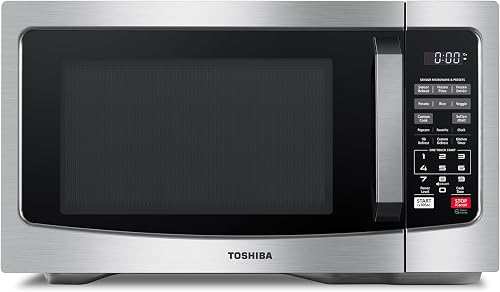
1. TOSHIBA Countertop Microwave Oven
Best for: everyday family reheating and standard kitchens
The Toshiba Countertop Microwave balances footprint and power for daily kitchen use. It gives you 1000 watts of cooking power and a 1.2-cubic-foot interior. That means you get fast heating times without giving up your entire meal prep counter. The built-in smart sensor measures steam from your food to adjust heat levels automatically, so you won’t dry out your leftovers.
The 12.4-inch glass turntable rotates during operation. However, with exterior dimensions of 20.6 by 14.6 by 11.8 inches, it requires steady counter space that tiny studio kitchenettes might not spare. This unit isn’t for people who need to roast whole large poultry or warm giant catering pans, since a 1.2-cubic-foot box has its vertical limits.
Pros:
- Built-in humidity sensor prevents overcooking
- 12.4-inch turntable fits dinner plates
- Ten power levels offer cooking control
Cons:
- Takes up noticeable counter space
- Not tall enough for large birds
2. TOSHIBA Flatbed Microwave Oven with Inverter Technology
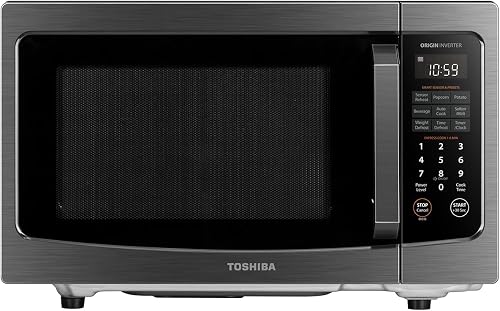
Best for: heating awkward dishes without messy cleanup
The Toshiba Flatbed Microwave swaps the traditional rotating wheel for a flat heating floor. Because there’s no turntable ring to clean around, you can wipe the smooth bottom with a single paper towel. The 1.3-cubic-foot cavity provides a flat interior surface for reheating various sizes or shapes of dishes.
Inside, the Origin Inverter delivers continuous 1200-watt power rather than cycling full heat on and off, which helps delicate sauces warm evenly. You also get 11 sensor auto menus that detect steam to set your cook times for you. Because there’s no mechanical wheel underneath, this oven runs without the common rumble or stutter of spinning glass trays. It isn’t for buyers who want an ultra-small box, as the 1.3-cubic-foot frame needs dedicated space.
Pros:
- Flatbed design fits irregular dish shapes
- Inverter delivers steady temperature control
- Smooth floor wipes down quickly
Cons:
- Footprint demands dedicated counter room
3. TOSHIBA Large Countertop Microwave Oven with Smart Sensor
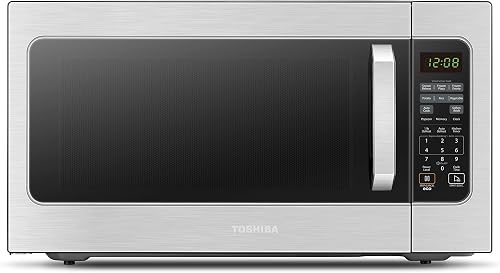
Best for: large families heating big meal platters
The Toshiba Large Microwave brings commercial-style room into a home appliance with its massive 2.2-cubic-foot capacity. Powered by 1200 watts, it handles heavy tasks quickly and has an enormous 16.5-inch glass turntable that easily swallows a 16-inch pizza or a whole chicken. It also features a smart humidity sensor and 23 automatic one-touch menu options that simplify daily cooking.
The trade-off here is physical bulk. Its outer dimensions measure 24.4 inches wide, 18.2 inches deep, and 13.6 inches high, which means it commands significant depth on standard kitchen cabinets. A handy on/off switch lets you mute loud end-of-cycle alerts when family members sleep. This machine isn’t for small apartments, tight corners, or narrow galley counters where prep space is already limited.
Pros:
- Huge 2.2-cubic-foot interior holds whole meals
- 16.5-inch turntable handles large bakeware
- Mute function silences cycle chimes
Cons:
- Requires significant counter depth
- Heavy body is harder to move
4. TOSHIBA Air Fryer Combo Microwave
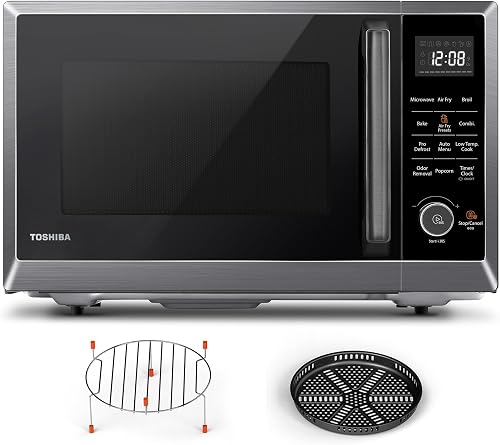
Best for: cooks wanting multiple appliances in one
The Toshiba Air Fryer Microwave packs eight cooking methods into a single 1.0-cubic-foot black stainless steel housing. It combines microwave heating with air frying, convection baking, broiling, low-temperature cooking, and odor removal. A 1000-watt output handles everyday heating, while the convection mode provides additional browning capabilities.
Because it crams multiple heating elements into a compact outer shell of 20.6 by 16.4 by 11.8 inches, the 1.0-cubic-foot interior is somewhat cozy. While its 12.4-inch turntable fits an 8-by-4-inch casserole dish, you won’t have room for deep vertical baking pans. A two-step child lock prevents accidental operation, though you must follow a set sequence to open the door. It isn’t for large households that need to warm multiple bulky dinner plates at the exact same moment.
Pros:
- Air fryer and convection capabilities included
- Position-memory turntable resets after use
- Odor removal setting cleans air
Cons:
- 1.0-cubic-foot cavity limits tall dishes
- Two-step door handle requires specific pull
5. GE Countertop Microwave Oven
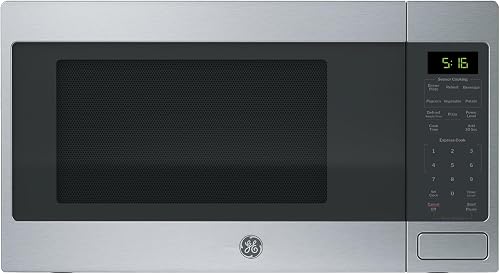
Best for: busy kitchens needing dependable high wattage
The GE Countertop Microwave provides 1150 watts of cooking power inside a balanced 1.6-cubic-foot stainless steel frame. Its built-in sensor controls track moisture levels to stop food from drying out, while express cook buttons start cycles with a single tap. The exterior spans 21.75 inches wide and 17.75 inches deep, giving you plenty of interior room for standard serving platters and family-sized bowls.
This model requires specific clearance for ventilation: GE states you must leave 3 inches open on each side and above, plus 1 inch behind it. If you slide it under low upper cabinets without clearance, hot air can build up. It isn’t for tight shelving units or enclosed alcoves that block required airflow around the sides and back.
Pros:
- 1150-watt output speeds up heating
- 1.6-cubic-foot space fits family platters
- Auto-defrost prevents edge overcooking
Cons:
- Requires three inches side ventilation clearance
- Exterior depth fills narrow counters
6. Sharp SMC2266KS 2.2 cu. ft. 1200W Stainless Steel Countertop Microwave
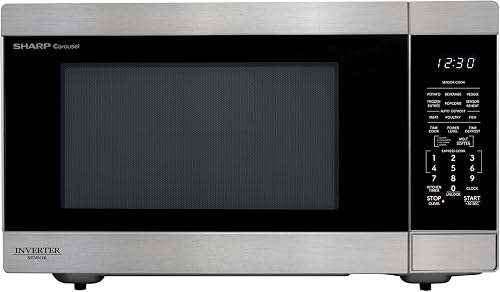
Best for: heavy cooking needs and delicate thawing
The Sharp SMC2266KS Microwave delivers 1200 watts across a generous 2.2-cubic-foot capacity. It pairs an inverter engine with a large 16.5-inch carousel turntable, giving you smooth, even heating across big pans without dried edges. Sharp also built in a specialized melt and soften function alongside sensor cooking menus, which helps with baking ingredients like butter or chocolate.
The sleek interior features a gray finish illuminated by modern LED lighting, making it easy to spot food splatters against the walls. However, like other 2.2-cubic-foot giants, this stainless unit demands major counter space and weighs down your surface. This microwave isn’t for smaller homes or buyers who only need to warm up a mug of tea or a single cup of soup.
Pros:
- Inverter system prevents harsh heating spikes
- Huge 16.5-inch carousel turns full platters
- Melt and soften modes help bakers
Cons:
- Substantial counter space required
- Too large for simple reheating tasks
7. BLACK+DECKER Microwave Oven Countertop
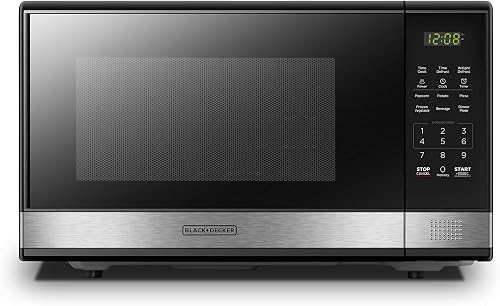
Best for: simple apartment use and quick reheating
The Black+Decker Countertop Microwave brings 1000 watts of reliable power to a mid-sized 1.1-cubic-foot frame. It features six pre-programmed buttons for standard items like popcorn, potatoes, pizza, and frozen vegetables, making dinner prep straightforward. The front panel includes a classic push-button door release, so you don’t have to pull hard on a latch to get your food out.
Its footprint sits at 20.6 by 14.8 by 11.8 inches, fitting neatly on most regular kitchen counters without blocking your cutting boards. The interior holds a removable 12.4-inch glass turntable that handles regular dinner plates. The trade-off is a plastic-and-steel enclosure that leaves out steam sensors, requiring you to monitor cook times manually. It isn’t for cooks who want humidity-controlled automated cycles.
Pros:
- Push-button door release opens easily
- High-powered models offer fast heating cycles.
- Six pre-programmed quick buttons
Cons:
- Lacks automatic steam sensor options
- Black enclosure shows kitchen dust
8. Chefman Countertop Microwave Oven 0.7 Cu. Ft.
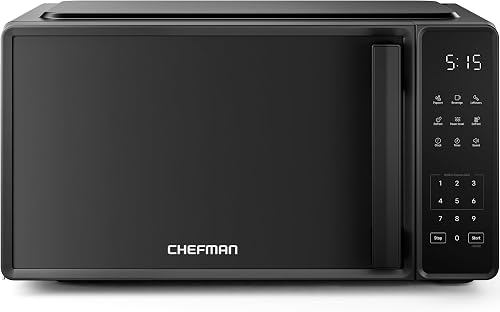
Best for: tiny apartments, dorm rooms, or RVs
The Chefman Countertop Microwave is designed for tight spaces, packing 700 watts of heating into a compact 0.7-cubic-foot cabinet. It includes six quick presets, a +30-second button, and ten adjustable power levels. For shared spaces or quiet mornings, an audio mute button lets you shut off the annoying end-of-cooking chimes completely.
The glass turntable is top-rack dishwasher safe. However, lower power levels mean water boils, and frozen meals cook noticeably slower than in high-performance units, so you’ll have to add extra time to your cooking steps. The handle also features a built-in child lock that requires pulling upward on the top edge to open. This isn’t for buyers heating wide 12-inch plates or big family bowls.
Pros:
- Tiny 0.7-cubic-foot size saves counter room
- Audio button mutes operational beeps
- Dishwasher-safe glass turntable
Cons:
- 700 watts extends cooking times
- Cavity can’t fit standard dinner plates
9. COMFEE’ Countertop Microwave Oven
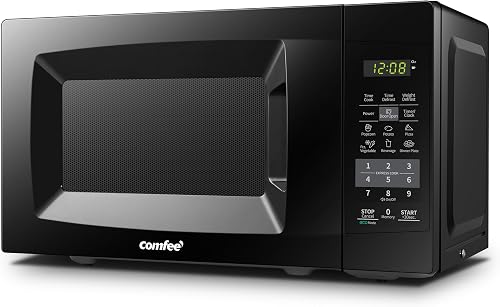
Best for: small kitchens watching standby power draw
The Comfee’ Countertop Microwave focuses on low power consumption with its built-in ECO mode, which cuts standby energy use by 50 percent. This 700-watt, 0.7-cubic-foot machine is small enough to sit on a desk or a tiny studio counter without getting in the way. It comes with two defrost modes by weight or time, six auto-cook presets, and a mute feature activated by holding the sound button for three seconds.
To comply with modern appliance safety rules, this microwave uses a two-step child lock that requires a specific sequence before the door opens. At 700 watts, you give up rapid reheating speeds for a small footprint, meaning dense frozen dinners will take several extra minutes to get hot in the center. This unit isn’t for households that rely on a microwave to cook complete family meals every single night.
Pros:
- ECO mode reduces standby electricity use
- Mute option silences all keypad beeps
- Small chassis fits tiny utility surfaces
Cons:
- A lower power rating increases cook times.
- Two-step door lock adds extra effort
Also Worth Considering
- Chefman Countertop Microwave Oven: This 1.1-cubic-foot model steps up to 1000 watts of power for users who want the Chefman mute button and express cooking, but need enough interior room to fit standard dinner plates.
- Sharp SMC1662KS Countertop Microwave Oven: A solid middle-ground choice offering 1.6 cubic feet of capacity and 1100 watts of power in stainless steel, bridging the gap between standard compact units and giant family ovens.
- TOSHIBA Microwave Oven: Designed for spaces that can’t fit a 1.2-cubic-foot unit, this 0.9-cubic-foot black stainless oven supplies 900 watts of power for balanced reheating in tighter living quarters.
How to Choose in Sixty Seconds
How much interior capacity and wattage do I actually need?
For reheating standard dinner plates and mugs, a 1.1 to 1.3-cubic-foot microwave with 1000 watts gives you the best mix of speed and space. Compact units with smaller capacities fit small studio counters, but they require longer cook times and won’t hold wide dishes. If you cook whole chickens or 16-inch pizzas, you’ll need a 2.2-cubic-foot box running at 1200 watts. Match the wattage to your patience: higher watts heat your food faster and more evenly across large plates.
Should I choose a flatbed floor or a spinning glass turntable?
Choose a flatbed if you frequently heat rectangular bakeware or hate cleaning sauce splatters under rotating wheels. Flat interiors distribute energy from underneath, giving you smooth floors that wipe clean in seconds without moving pieces. Turntable models spin the dish through stationary microwave beams, which works well for regular round bowls and coffee mugs. However, wide dishes can strike the side walls on a turntable, causing the roller ring to slip off its track and rattle during cooking cycles.
What should I check about counter space before ordering?
Measure your counter depth and check the clearance requirements listed by the manufacturer before buying any model. Compact units take up minimal width, but large capacity ovens measure significantly wider and deeper. In addition, brands like GE require open air on each side and above the cabinet to vent hot air safely. For verified safety guidelines on appliance radiation and operational ventilation, review the FDA microwave oven safety standards to keep your kitchen setup compliant.
The Toshiba Countertop Microwave remains our top recommendation for everyday family kitchens, while the Toshiba Flatbed Microwave is the smarter pick if you want simple cleaning and room for oddly shaped dishes. Measure your available counter width and pick the size that matches your standard dinner plates.
Frequently Asked Questions
Can standard ceramic and glass cookware fit into compact microwaves?
Standard 10-inch or 11-inch plates fit easily into 1.1-cubic-foot microwaves with 12.4-inch turntables. Compact 0.7-cubic-foot models feature smaller trays that prevent standard dinner plates from laying flat. Always measure your widest dish before purchasing to ensure it clears the interior walls.
What causes a microwave turntable to rattle or stop turning?
Turntables rattle when the roller guide gathers grease or an oversized plate pushes the tray off its hub. You can fix this by cleaning the wheels and realigning the tray notches over the motor coupler. Flatbed models like the Toshiba avoid these mechanical issues by using an internal antenna.
Are 700-watt microwave ovens powerful enough for frozen dinners?
Entry-level microwaves can cook frozen dinners, but you must add 25 to 50 percent more cook time than the package recommends. Most frozen meal instructions assume an 1100-watt machine. If using a lower-powered unit, extend cook times and allow for standing to ensure the core heats through.
How do child safety locks work on newer microwave doors?
Newer microwaves feature safety door latches or keypad locks to prevent children from opening hot ovens. Models like the Toshiba Air Fryer Microwave use mechanical latches requiring a specific pull to release the door. Keypad locks allow you to disable all buttons by holding the Stop key for three seconds.
Conclusion
Choosing the right model makes your daily routine much smoother, so don’t rush the decision. Think about the meals you actually cook and measure your counter space before you buy. You’ll find that a well-chosen appliance won’t just heat your food; it’ll save you time every single day.
Related Article: Best Kitchen Faucets with Pull Down Sprayers for Modern Homes